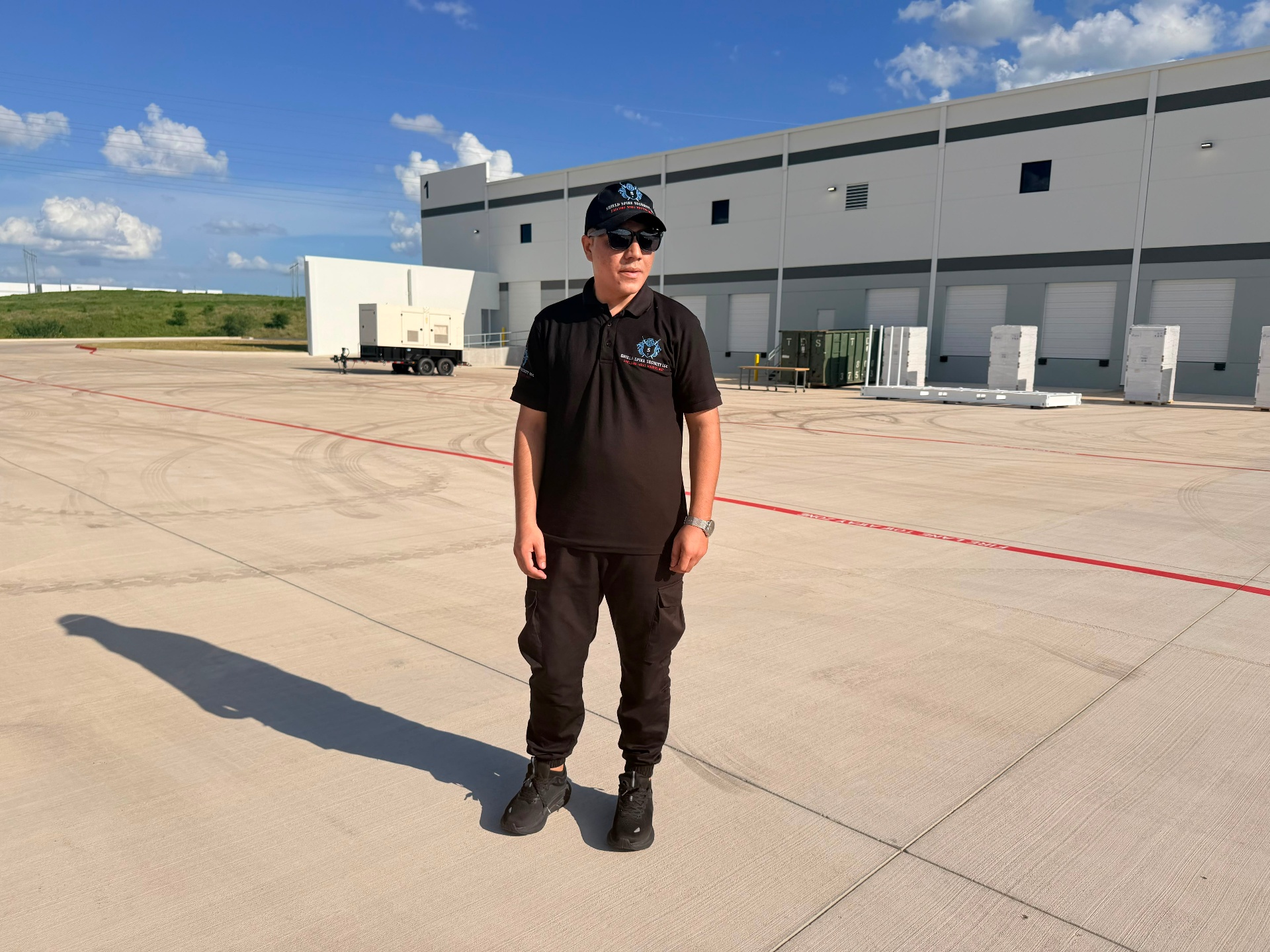
Security for facilities that never fully close
A distribution facility is a building with a schedule attached. Trucks arrive against someone else's timetable, dock doors stand open for hours, drivers and temporary staff cycle through, and inventory sits in a yard that is easier to reach than the building. Shield Spire structures coverage around the movement, not just the perimeter.
Where warehouse exposure actually sits
Most warehouse loss is not dramatic. It happens at the point where the building opens to the outside — the dock, the yard, the gate — during the hours when the site is busiest or emptiest. Coverage has to be placed where movement happens, not spread evenly around a fence line.
- Dock doors open for extended loading and unloading windows
- Driver, vendor and temporary-staff traffic through the day
- Trailer and container yards holding loaded freight
- Inventory staged outdoors when the building runs out of room
- Long, low-visibility perimeters around large footprints
- Shift changes that leave brief gaps in who is watching
Operational considerations
These are the conditions that most often shape a warehouse security scope — and the coverage that answers each one.
- High-value inventory staged outside the building
- How coverage answers itOfficer presence positioned on the staged material itself, with patrol loops through the yard rather than only the fence line
- Dock doors stand open during loading windows
- How coverage answers itCoverage scheduled against the dock schedule, so officers are present when the building is most open
- Drivers and temporary staff rotate constantly
- How coverage answers itA staffed access point that observes and records arrivals against the rules you set
- Coverage is needed before a permanent program can be built
- How coverage answers itShort-notice deployment — Shield Spire has placed a licensed officer the same evening a request was received
- After-hours entry to a large, poorly lit perimeter
- How coverage answers itVisible uniformed patrol on an irregular pattern, with documented observation and escalation to law enforcement
- No record of what happened on the overnight shift
- How coverage answers itGPS-verified attendance and daily activity reports delivered for every shift
What good warehouse coverage looks like
Warehouse scopes are usually built around a small number of decisions: where the officers stand, when they are there, and how many are needed to cover a footprint that a single post cannot see across.
- Officer presence placed on the highest-value exposure, not the geometric centre
- Patrol loops through yard, dock apron and staged material
- Access observation at the gate or driver entrance during active hours
- Multi-officer teams with a supervisor when one post cannot cover the footprint
- Coverage windows matched to the operating schedule, not a generic 12-hour block
- Documented shift handover so nothing is lost between crews
How a deployment is stood up
Shield Spire does not simply send an officer. Coverage is scoped, assigned, supervised and documented.
- Step 1
Walkthrough
A supervisor walks the facility with you to confirm dock layout, yard access, lighting and where value is actually sitting.
- Step 2
Scope
Officer count, classification, post positions and patrol pattern are set against the footprint and the operating schedule.
- Step 3
Assignment
Texas DPS licensed officers are assigned, with a patrol supervisor coordinating when the scope calls for a team.
- Step 4
Coverage
Officers hold their posts, run yard and dock loops, and observe access through the scheduled window.
- Step 5
Documentation
Attendance is GPS-verified and activity is captured in a daily report delivered for every shift.
- Step 6
Escalation
Access questions and site situations are resolved by direct communication with you rather than by assumption.
Services that fit this environment
Warehouse scopes usually pair an officer classification chosen for the value at risk with the coverage pattern the footprint requires.
Mobile Patrol
Scheduled patrol visits for facilities where a continuous post is not warranted, or to extend coverage between staffed hours.
Unarmed Security
The standard classification for most warehouse posts — visible presence, access observation and documented patrol.
Armed Security
Used where the value staged on site or the facility's location warrants it, decided during the walkthrough rather than by default.
Corporate Security
For facilities with attached offices, credential checks and reception-style access alongside the operational floor.
What you know the next morning
The difference between a guard and a security operation is what exists after the shift. Shield Spire deployments are supported by Shield Spire Ops, the operations platform Shield Spire Security uses for scheduling and accountability: officer attendance is GPS-verified, activity is captured in daily activity reports, incidents are documented in a structured format, and supervisors have visibility while the shift is still running.
Real deployments
Completed commercial and industrial engagements are documented below. Every figure comes from the deployment record.

Industrial Facility & High-Value Asset Protection – Greater Austin Area, Texas
A multi-week engagement protecting an industrial facility and staged high-value assets in the Greater Austin Area, with rotating weekday overnight and continuous weekend coverage. During one overnight shift, an approaching individual discontinued and left after observing the visible security presence. No unauthorized entry, property disturbance, or escalation occurred across 322 documented hours.
Read the case studyEmergency Commercial Warehouse Security Deployment – Central Texas
An emergency request from a commercial client in the Southeast Austin industrial corridor, where high-value inventory had been staged outdoors while awaiting placement inside the warehouse. Shield Spire deployed the first licensed officer the same evening, staffed every scheduled overnight shift, and the client extended the contract before it expired.
Read the case studyCommon questions
- Can coverage start on short notice?
- Often, yes — it depends on scope and officer availability. Shield Spire has accepted an emergency commercial warehouse request and placed the first licensed officer on post the same evening.
- Can officers cover a yard as well as the building?
- Yes. Where value is staged outdoors, the yard is usually where coverage should be concentrated. Patrol routes are set during the walkthrough to reflect where material is actually sitting.
- How many officers does a facility need?
- It depends on the footprint and how many points need to be watched at once. A single post suits a compact site; larger facilities are staffed as a coordinated team with supervisor oversight.
- Do officers handle inventory or operate equipment?
- No. Officers provide security presence, access observation and documentation. They do not handle freight, operate material-handling equipment or take part in warehouse operations.
- What do we receive after each shift?
- A daily activity report covering patrols, observations and site conditions, with GPS-verified attendance for the officers assigned.
Related environments
Properties with a similar access and after-hours profile.
Plan security for your facility
Tell us the facility, where value is sitting and the hours you need covered. A supervisor will walk it with you before anything is scoped.